SuDS
SuDS regulations explained: what groundworkers need to know
Sustainable Drainage Systems are now a planning fact of life. Here's the plain-English version of where the rules come from, what they ask of a development, and where attenuation fits.
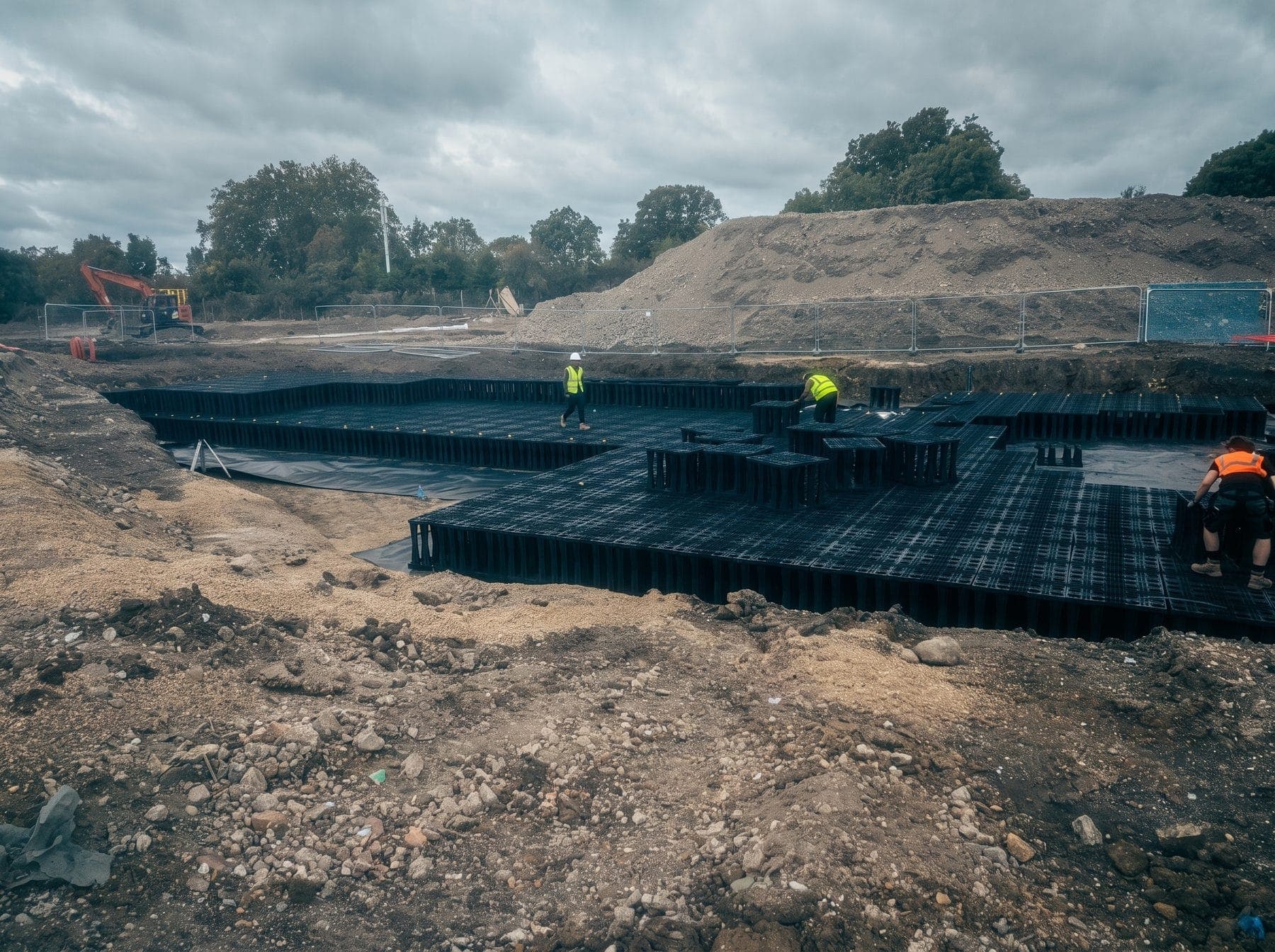
If you build anything that adds hard surface, the water that used to soak into the ground now runs off faster and in greater volume. Left unmanaged, that overloads sewers and watercourses downstream. Sustainable Drainage Systems — SuDS — are the planning response: manage surface water on or near the site, and release it at something close to the natural rate.
For groundworkers and developers, SuDS is less a single rule than a set of expectations that show up as planning conditions. This is the plain-English version.
Where the rules come from
The backbone is the Flood and Water Management Act 2010, which set the direction for managing surface water sustainably. In practice, delivery runs through the planning system: local planning authorities and lead local flood authorities apply national policy and the non-statutory technical standards for SuDS, alongside Building Regulations Part H for drainage.
The headline principle across all of it is the drainage hierarchy — deal with surface water as high up this list as the ground allows: infiltrate it, then discharge to a watercourse, then to a surface water sewer, and only as a last resort to a combined sewer.
What a development is usually asked to do
- Limit the peak discharge rate — often back towards the greenfield runoff rate for the site.
- Store the difference during a storm so it can be released slowly (this is where attenuation comes in).
- Manage water quality, not just quantity, so runoff isn't carrying pollutants downstream.
- Show the system can cope with design storms, including an allowance for climate change.
- Set out how the system will be maintained for the life of the development.
Where attenuation and soakaways fit
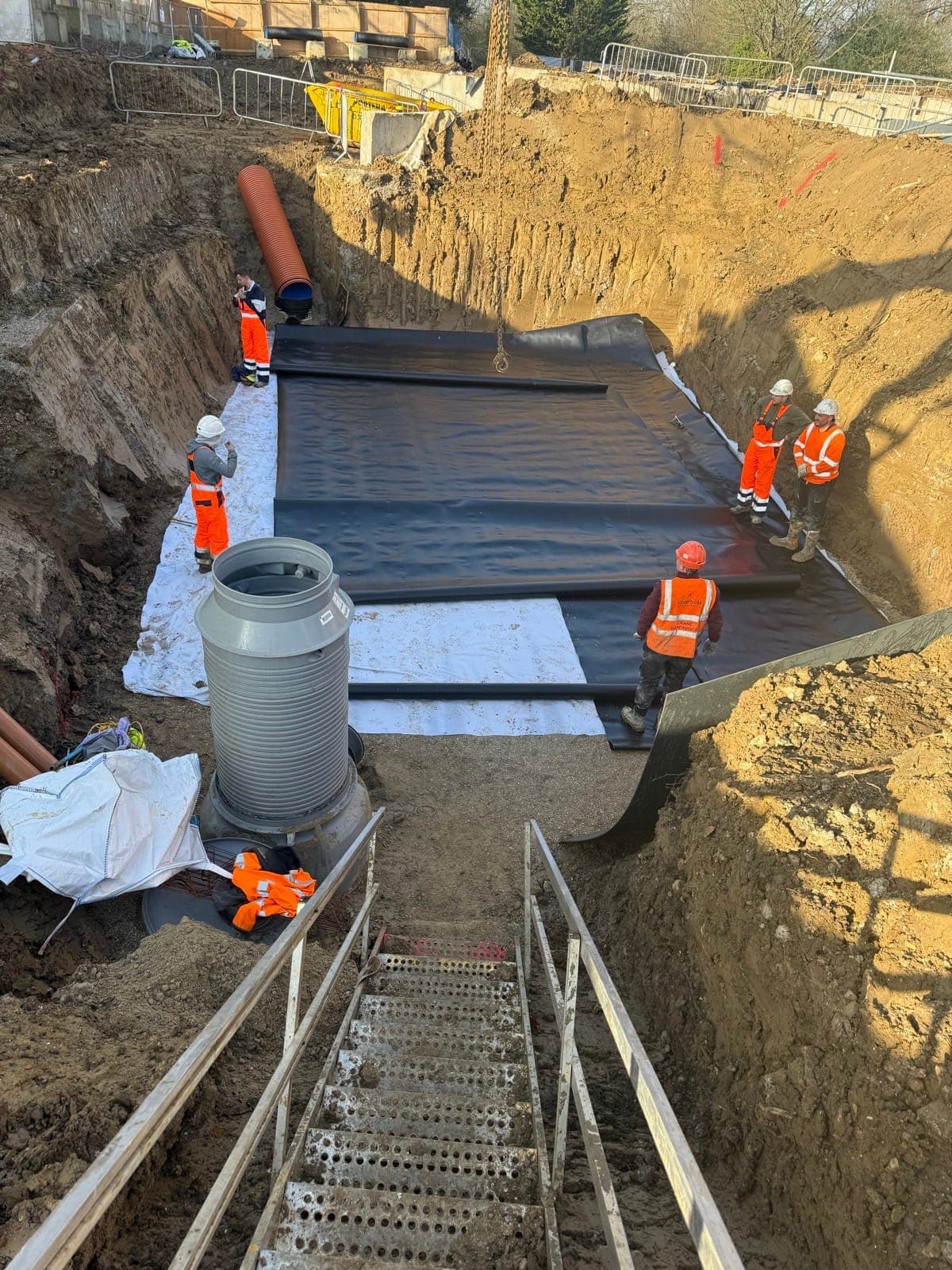
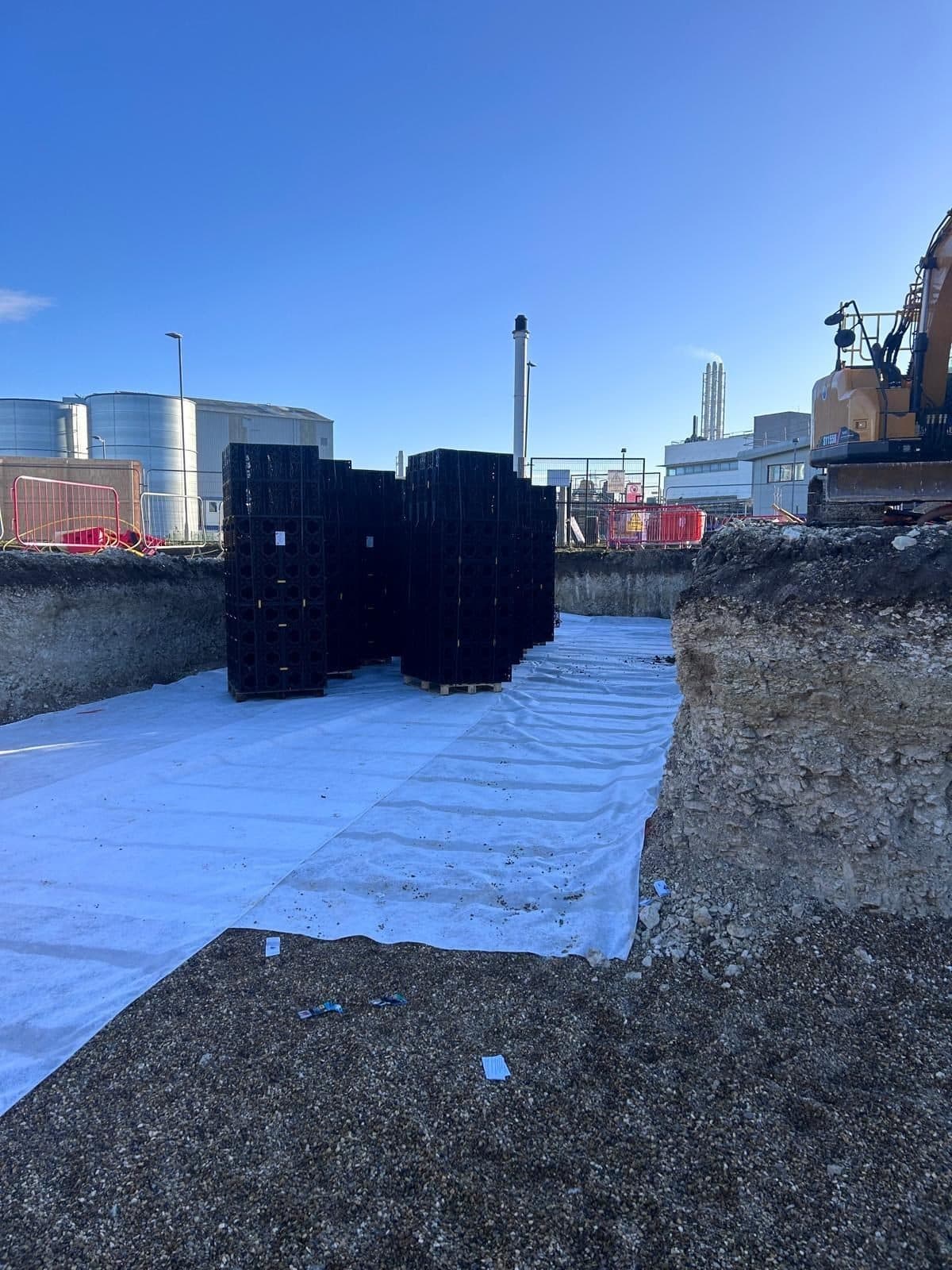
If the ground infiltrates well and there's enough separation from groundwater and buildings, a soakaway lets water return to the earth — top of the hierarchy. Where infiltration isn't viable, an attenuation tank stores the storm and releases it through a flow control at the permitted rate.
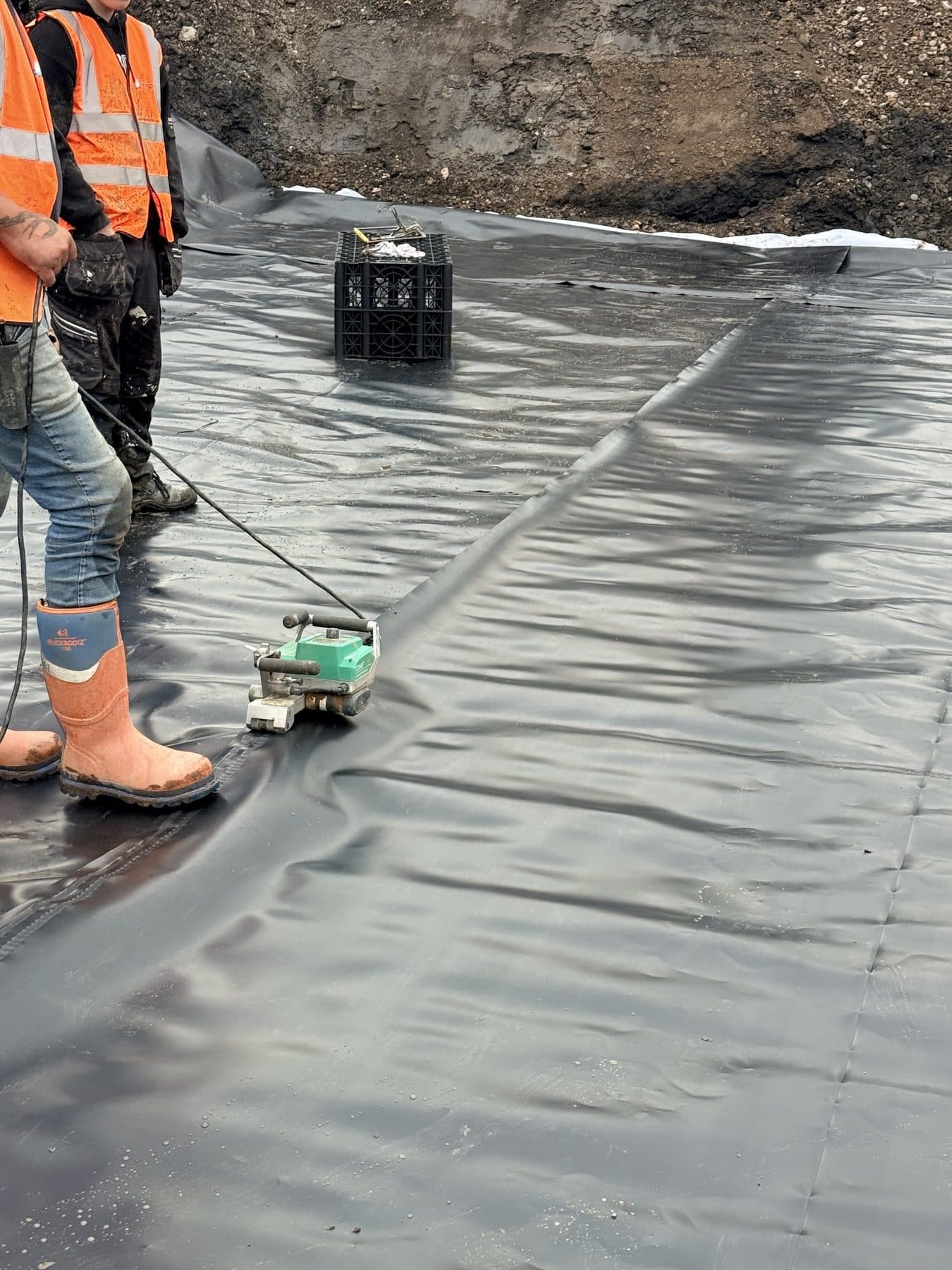
Your drainage engineer sizes the system and sets the discharge rate. Our job is to build it exactly to that design — welded, tested and documented so it satisfies the conditions first time.
The practical takeaway
SuDS conditions are not optional extras — they gate discharge of the planning permission and, often, adoption. The cheapest way through them is to build the specified system properly and hand over the QA pack the authority expects. That's the part we take off your hands.
Got a site that needs one of these?
Tell us the details and we'll come back with a quote within one working day.