Gas protection
CS1 to CS6: what your site's gas characteristic situation means
Your ground investigation gives the site a characteristic situation from CS1 to CS6. Here's what each one means, how it's worked out, and what it asks of the gas protection.
If your site sits on made ground, near a former landfill or over old mine workings, the ground investigation will usually end with a gas risk assessment — and that assessment gives the site a characteristic situation, written CS1 to CS6. It's the single number that decides how much gas protection the building needs.
The classification comes from BS 8485, the British Standard code of practice for protecting new buildings from methane and carbon dioxide ground gases. This is the plain-English version of how it works.
How the CS is worked out
Monitoring wells on site record two things over a series of visits: the concentration of methane and carbon dioxide, and how fast gas is flowing out of the ground. Multiply the worst-case concentration by the flow rate and you get the gas screening value, or GSV, in litres per hour. Where no flow is recorded, a small default flow is assumed rather than zero.
The GSV then puts the site into one of six bands.
| Characteristic situation | Gas screening value | Risk |
|---|---|---|
| CS1 | Below 0.07 l/hr | Very low |
| CS2 | 0.07 to below 0.7 l/hr | Low |
| CS3 | 0.7 to below 3.5 l/hr | Moderate |
| CS4 | 3.5 to below 15 l/hr | Moderate to high |
| CS5 | 15 to below 70 l/hr | High |
| CS6 | 70 l/hr and above | Very high |
What each band asks for
CS1 normally needs no specific gas protection — though a site only stays at CS1 if the concentrations are low too: methane above 1% or carbon dioxide above 5% pushes it up to CS2 even when the flow is small.
From CS2 upwards, the building needs protection measures, and the higher the band, the more protection it needs. BS 8485 sets this out as a points score: each band and building type has a minimum score, and the design reaches it with a combination of measures — the floor slab, ventilation beneath it, and a gas-resistant membrane. A private house on CS2 needs fewer points than the same house on CS4; a well-ventilated commercial unit needs fewer than a house on the same ground.
Where the membrane fits in
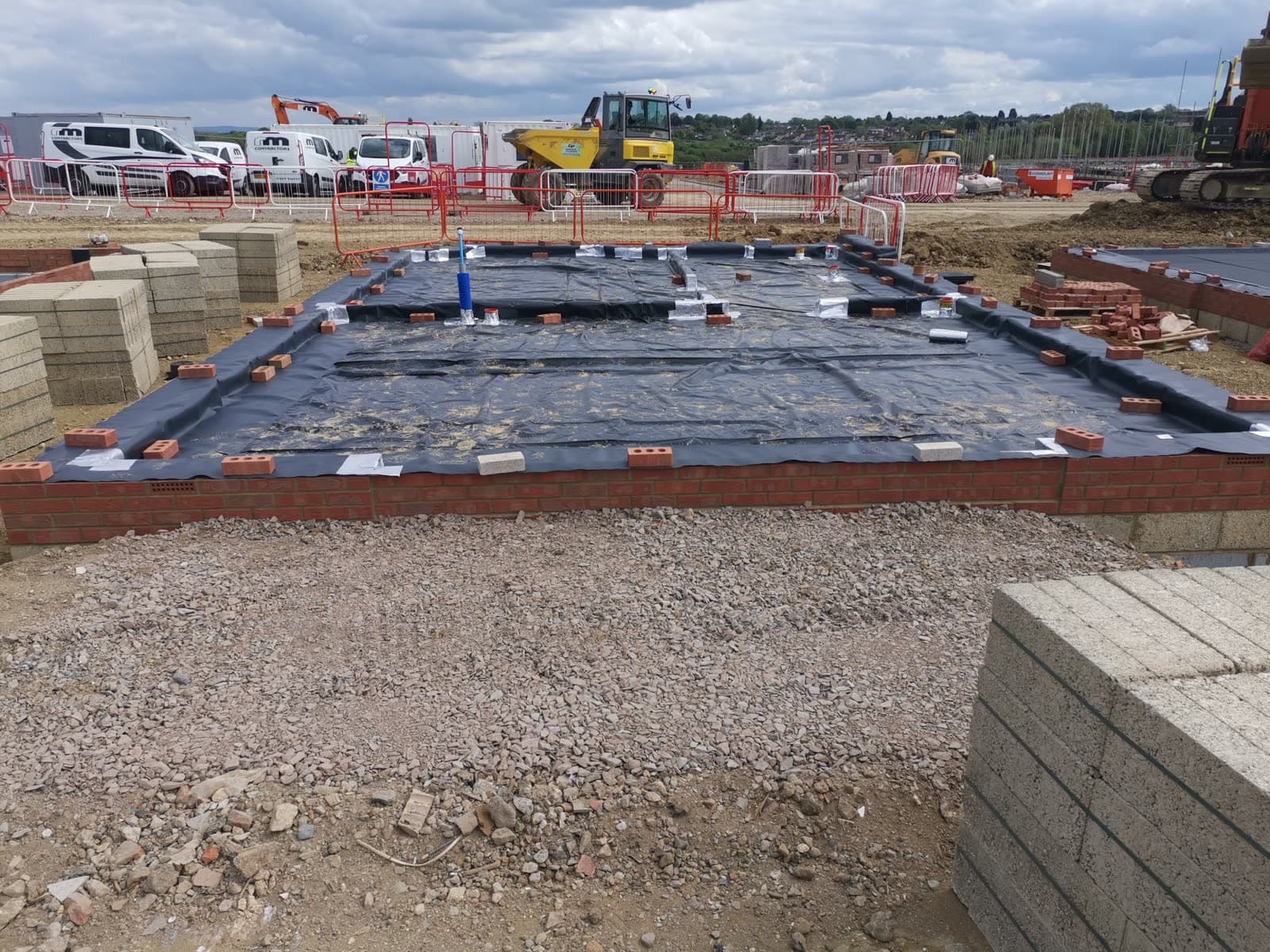
- The membrane is one of the measures that earns points — and it only earns them if it's installed properly and verified.
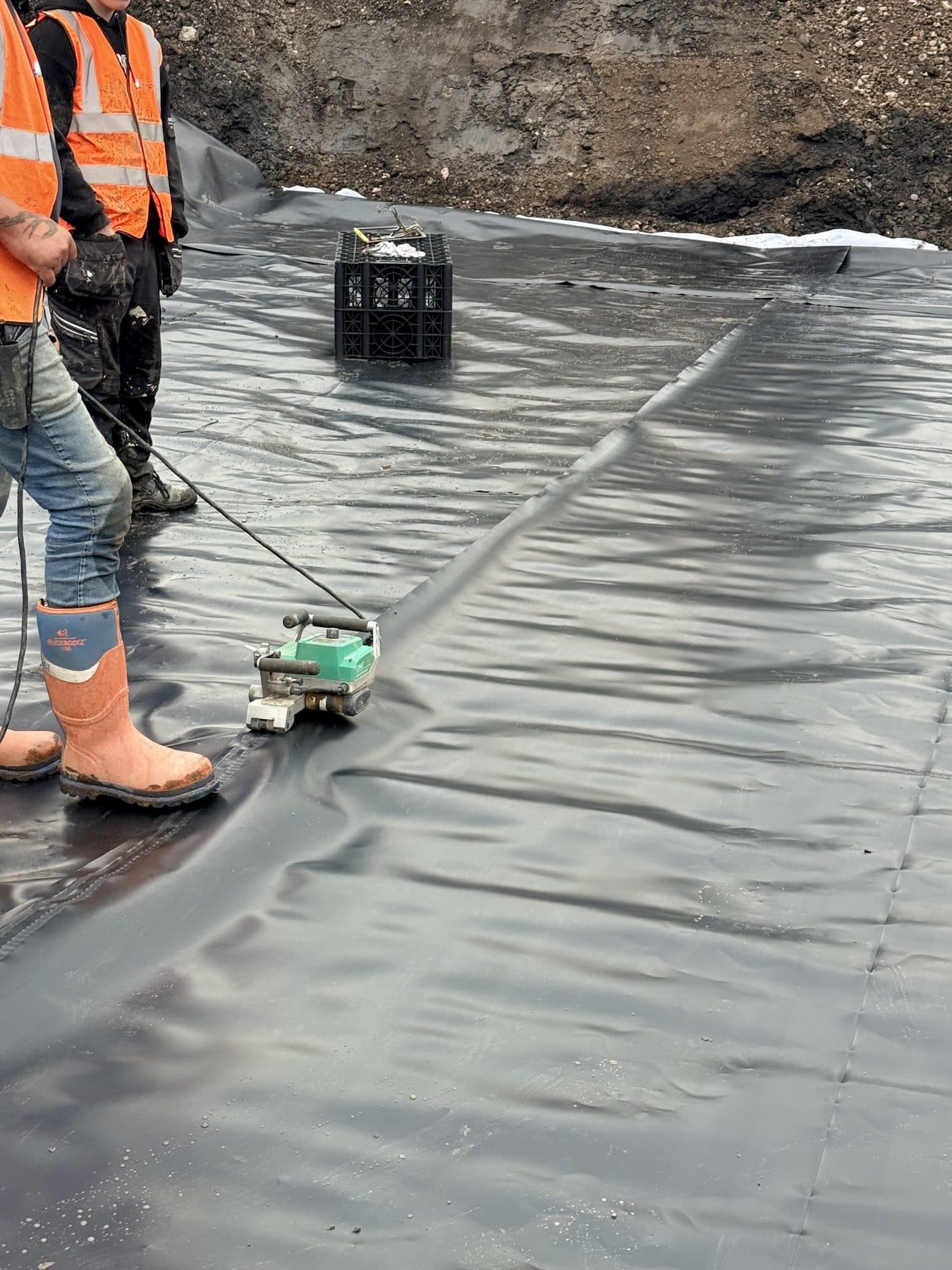
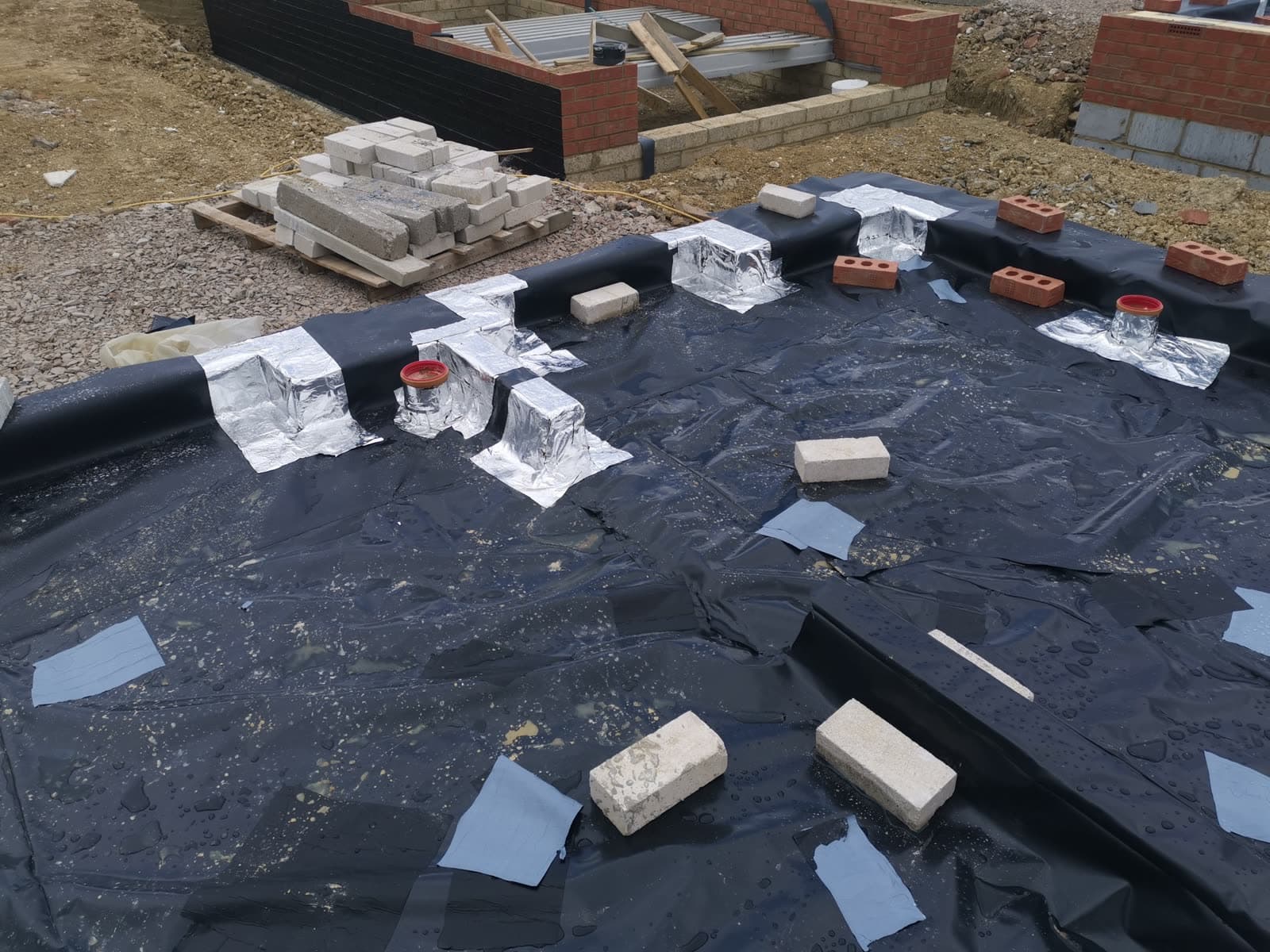
- Every joint has to be sealed to the manufacturer's method, and every service penetration needs its own top-hat or collar.
- On higher-risk sites the installation is independently checked before the slab is poured, so the warranty provider and building control can see it was built as designed.
- Hydrocarbon-contaminated ground needs a membrane rated for it — not every gas membrane resists hydrocarbons.
The point
The CS isn't something to argue with — it comes from the monitoring and your consultant's assessment. What matters on site is that the protection the design calls for is the protection that gets built. That's the part we're accountable for: the membrane laid, sealed and detailed to the specification, and the records to prove it.
Got a site that needs one of these?
Tell us the details and we'll come back with a quote within one working day.