SuDS
Soakaway or attenuation tank — which does your site need?
Two ways to manage surface water, and the choice comes down to one question: what can your ground actually absorb?
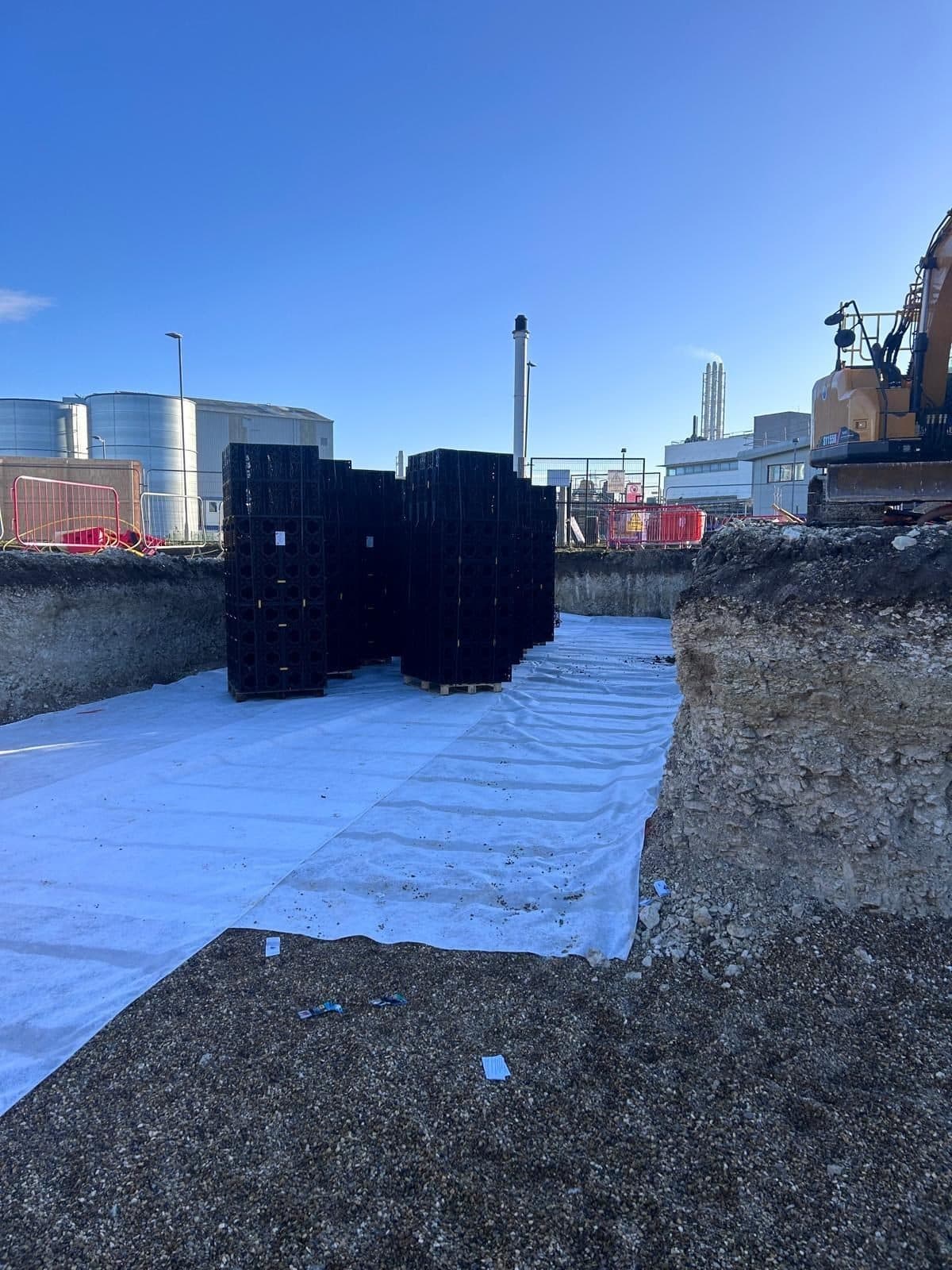
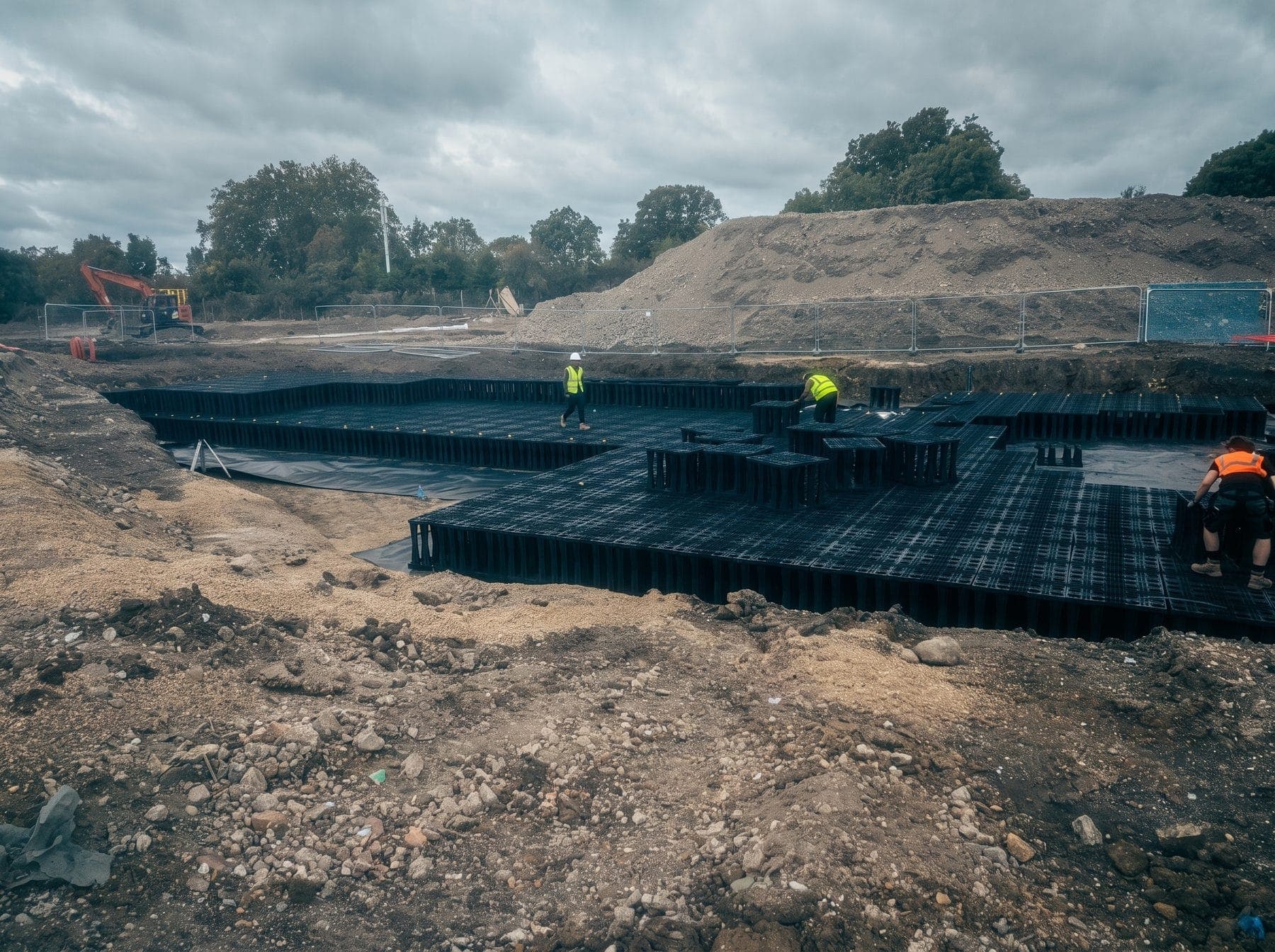
Both systems store stormwater underground in geocellular crates. The difference is what happens to the water next — and that's decided by your ground, not your preference.
The soakaway
A soakaway is wrapped in a permeable geotextile rather than a sealed membrane. Water passes through it and infiltrates back into the surrounding ground. It's the top of the drainage hierarchy — sustainable, no discharge consent needed — but it only works where the ground genuinely absorbs water and there's enough separation from groundwater and foundations.
The attenuation tank
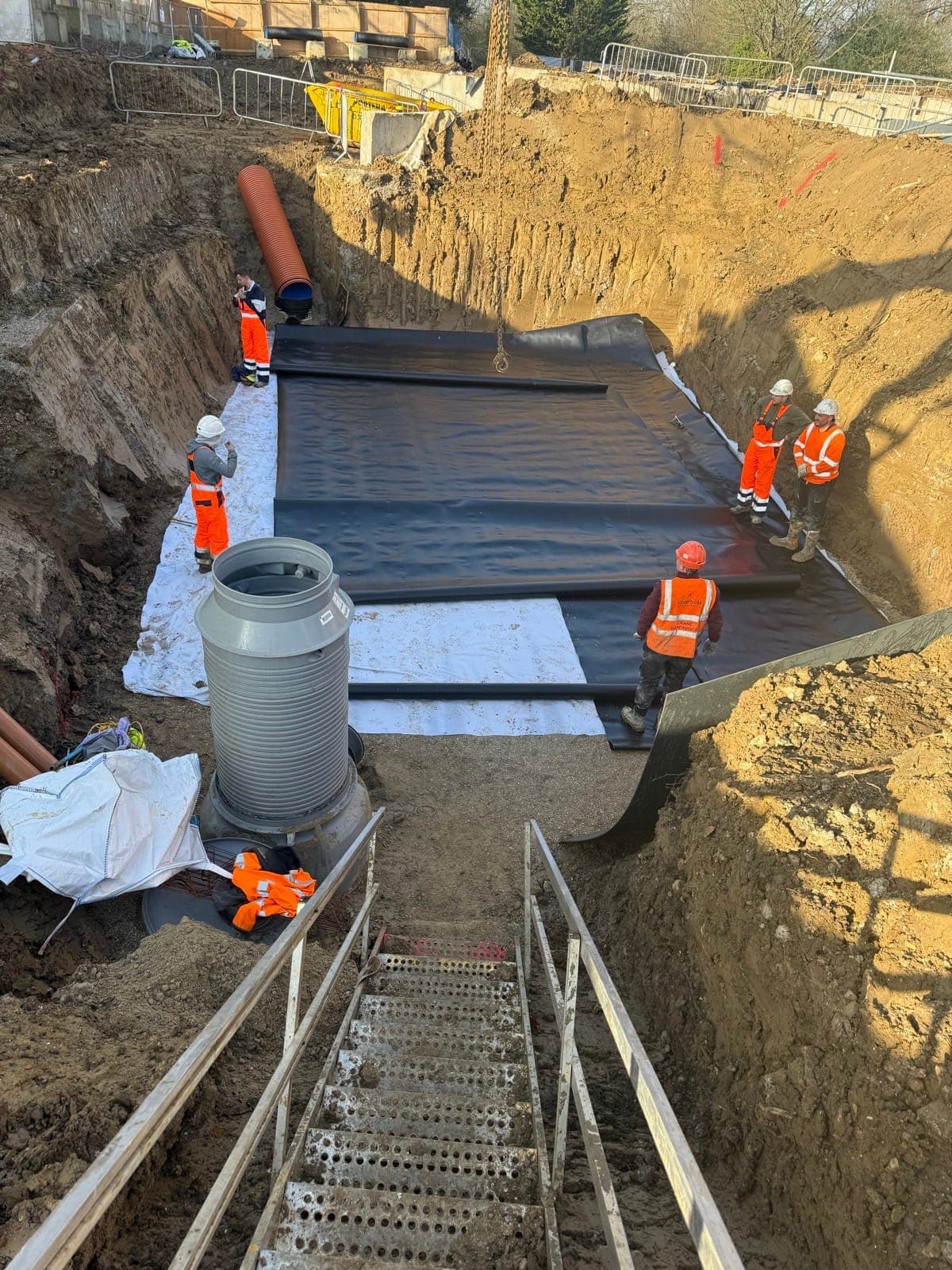
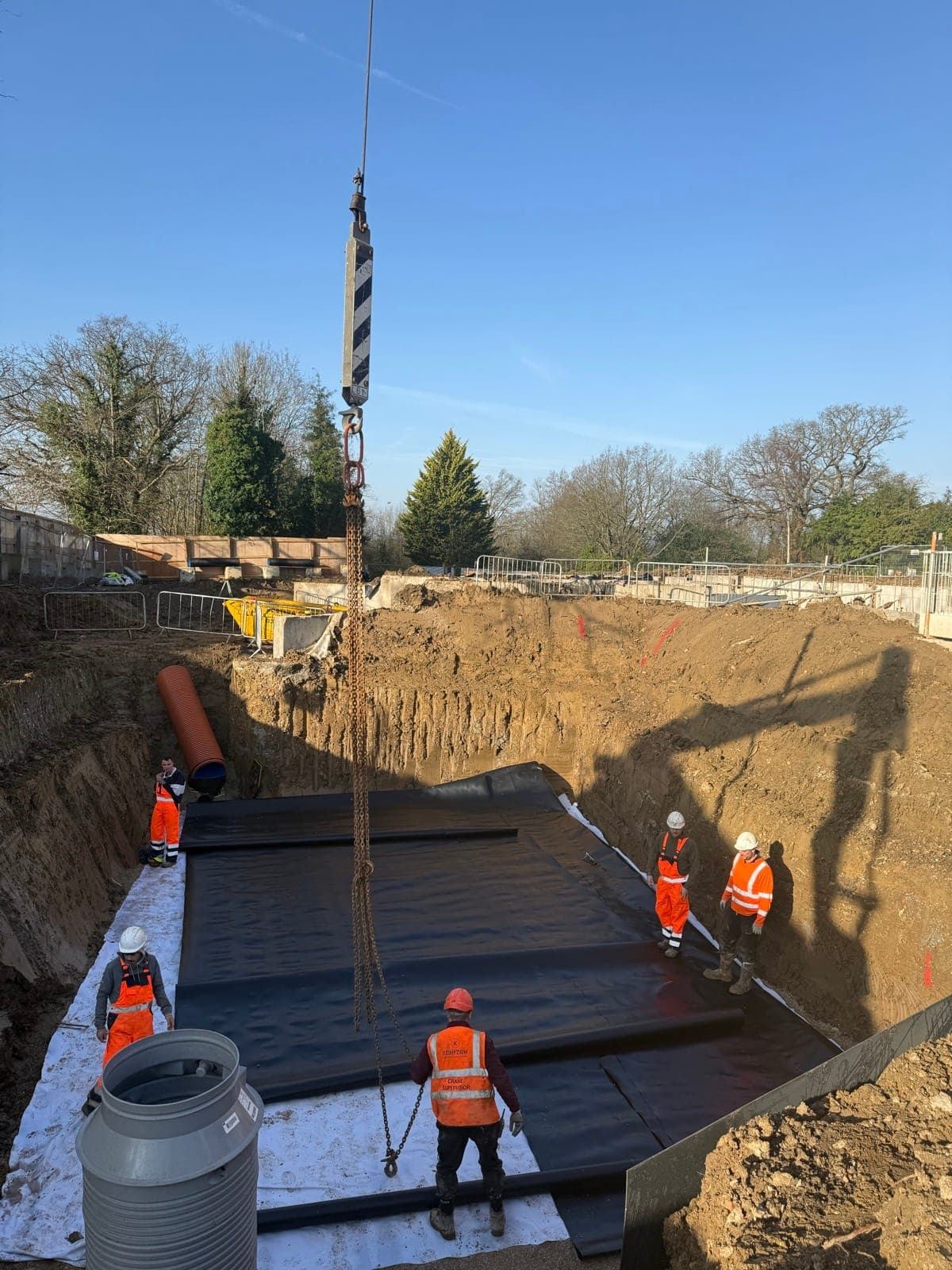
An attenuation tank is sealed with an impermeable membrane. It holds the storm and releases it at a controlled rate to a sewer or watercourse. This is the answer where infiltration isn't viable — heavy clay, high water table, or a discharge consent that sets a maximum rate.
How the decision gets made
- Good percolation results + enough separation → soakaway.
- Poor infiltration, clay, or a discharge consent → attenuation with a flow control.
- Marginal results → your engineer's call; sometimes a hybrid.
A percolation test settles it. If your results are marginal we'll say so, rather than install a soakaway that won't drain. We build either system to the design — the honest answer matters more than the sale.
Got a site that needs one of these?
Tell us the details and we'll come back with a quote within one working day.