Lining
Hot Wedge Welding vs Tape Bonding: Why Welded Pond Liners Outperform Taped Systems
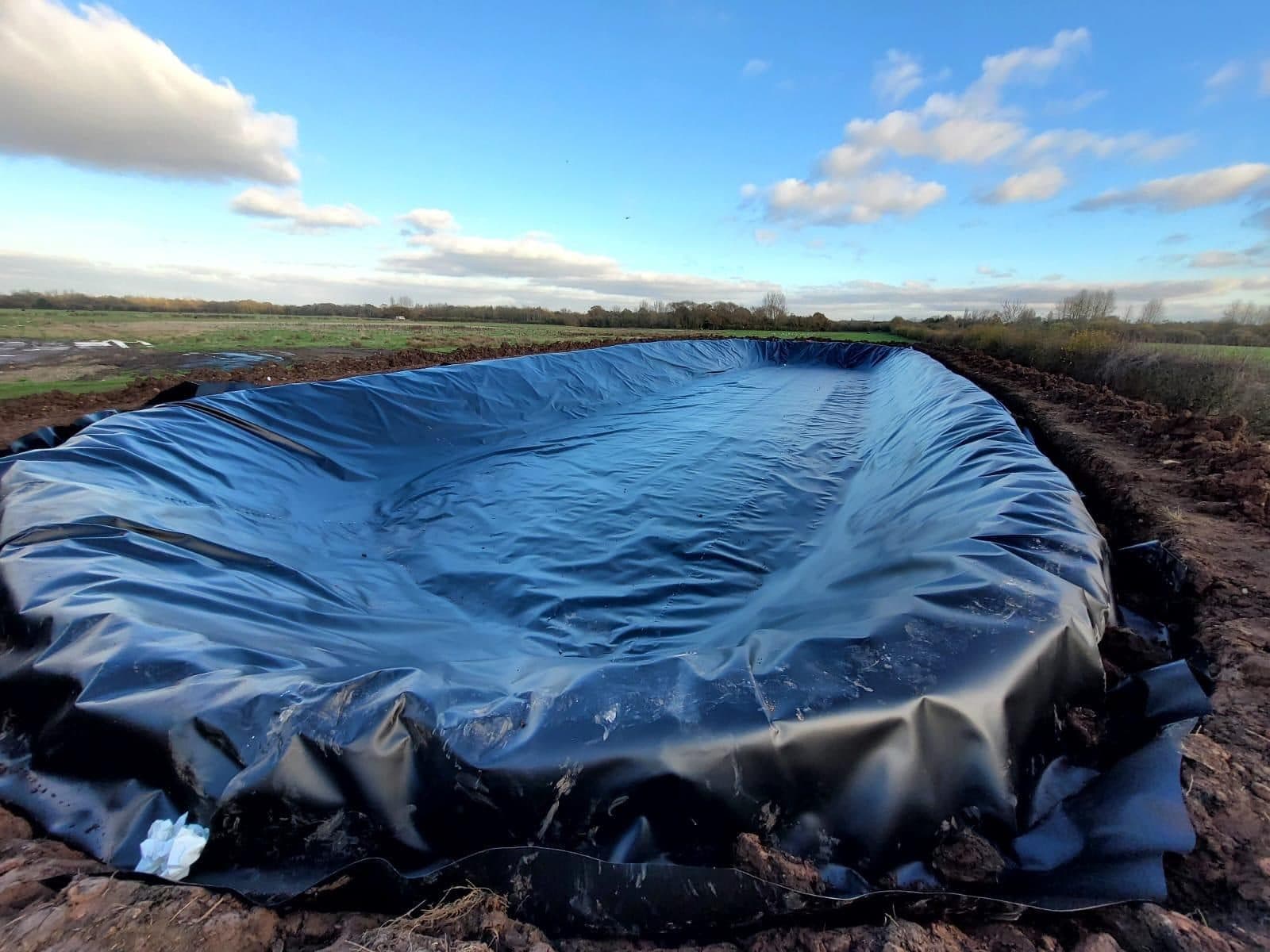
When a pond, lagoon or attenuation tank leaks, it almost never fails in the middle of a sheet. It fails at a seam — so the way those seams are made decides how long the liner holds.
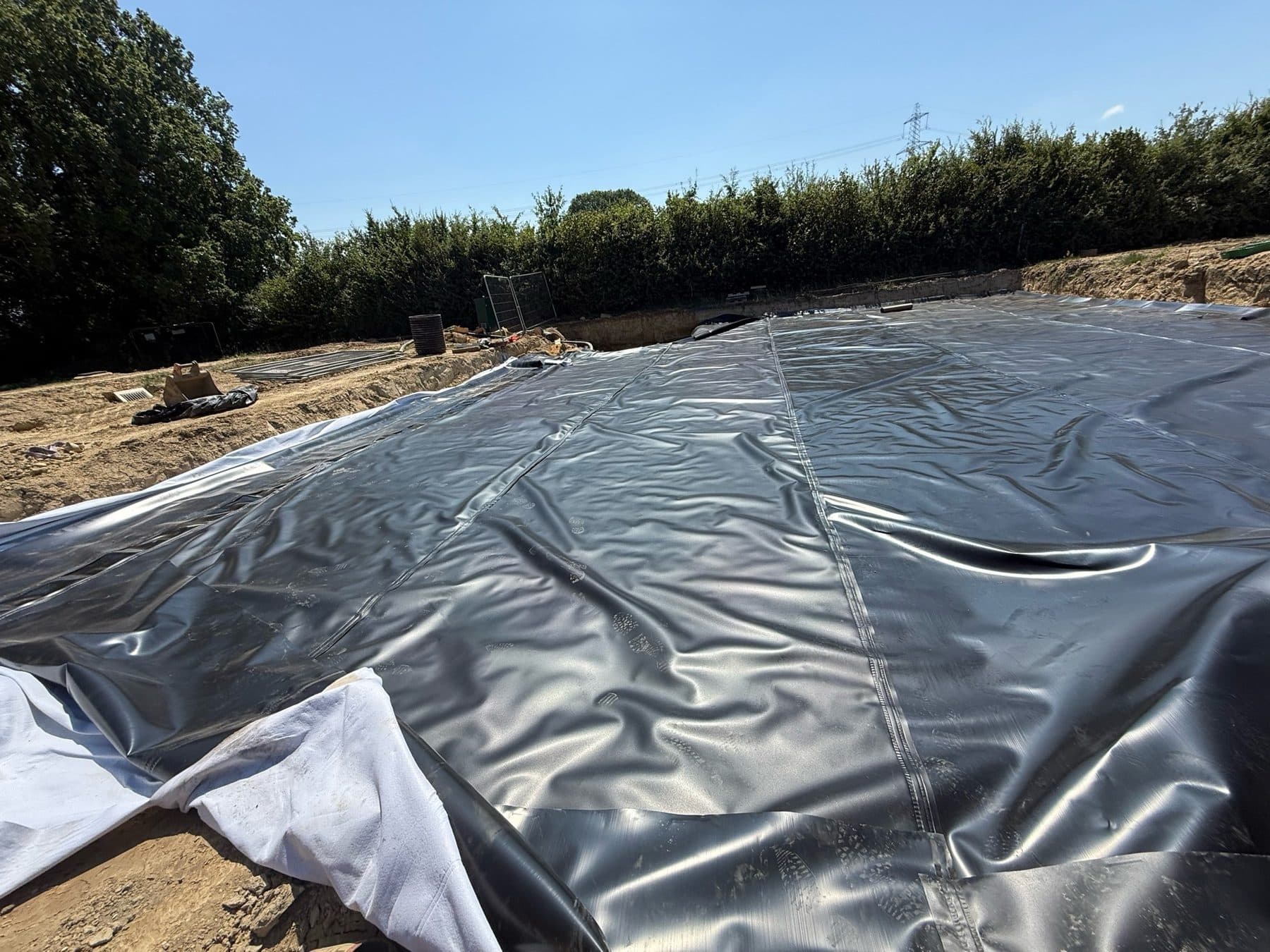
When a pond, lagoon or attenuation tank leaks, it almost never fails in the middle of a sheet. It fails at a seam. The way those seams are joined is the single biggest factor in whether a liner holds for decades or starts seeping within a few seasons. Yet it is the part of the specification contractors most often gloss over.
Broadly, there are two families of seaming method on UK sites: thermal welding (of which hot wedge welding is the workhorse) and tape or adhesive bonding. This article explains the difference, why welded seams consistently outperform taped ones on engineered containment, and where each method genuinely belongs.
How a liner seam actually fails
A seam carries stress the rest of the sheet does not. Ground movement, thermal expansion and contraction, hydrostatic load, settlement and the occasional boot or bucket all concentrate at the join. A seam fails when the bond between the two sheets is weaker than the sheets themselves, or when that bond degrades faster than the material around it.
That gives you two questions to ask of any seaming method: how strong is the bond on day one, and how well does it hold up over twenty or thirty years of loading, temperature cycling and exposure? Hot wedge welding answers both better than tape on engineered work — and, crucially, it lets you prove it.
What is hot wedge welding?
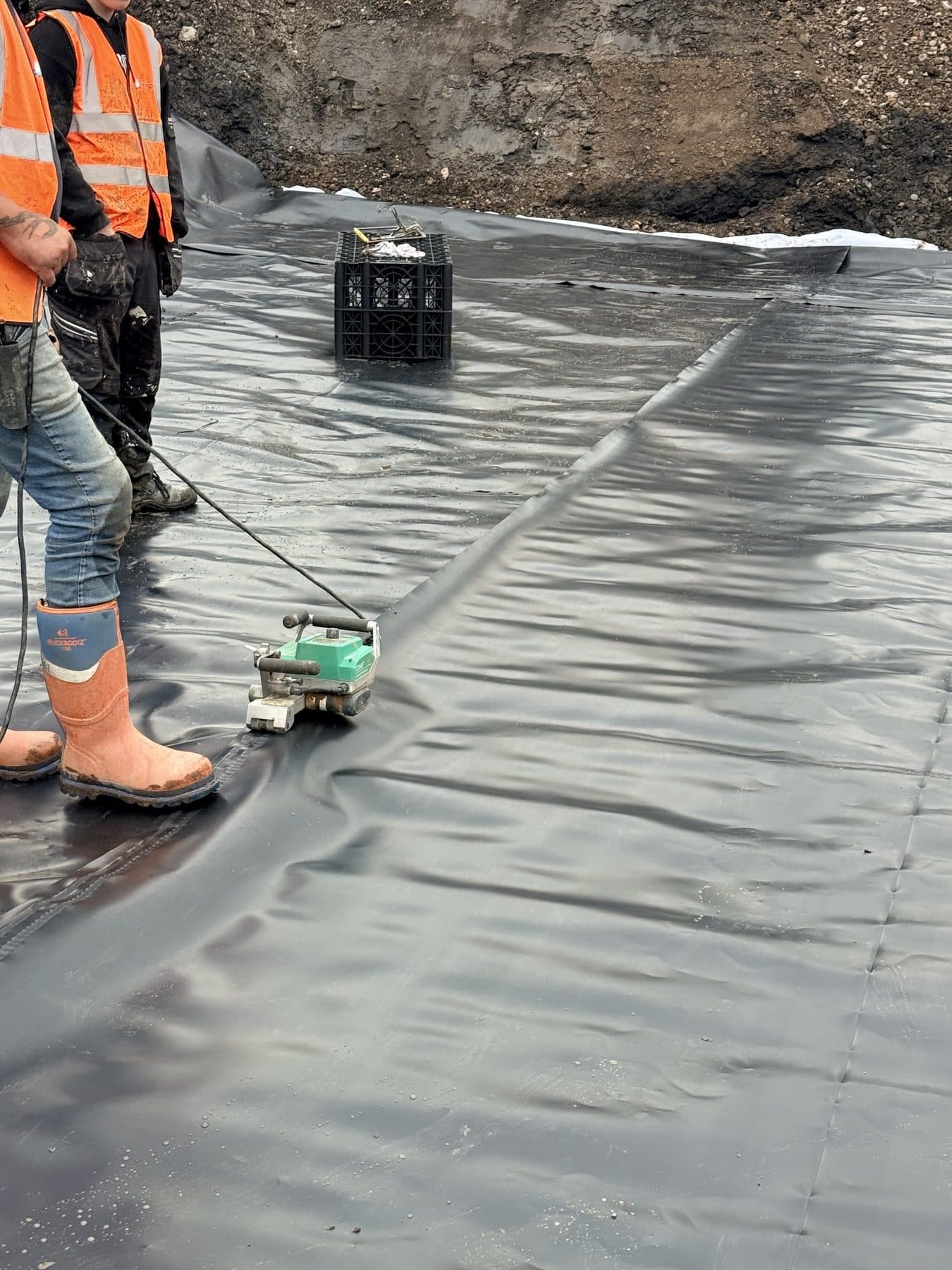
Hot wedge welding is a thermal fusion process. A heated wedge passes between the two overlapping geomembrane sheets and softens the surfaces of each — enough for the polymers to bond, without burning or thinning the material. Pressure rollers (nip rollers) immediately squeeze the molten surfaces together so they intermingle and fuse. As the join cools, you are left with a single, continuous bond made of the parent material itself.
Because the seam is the same polymer as the sheet, a correctly made weld can reach the strength of the surrounding material — the failure point in a peel test moves into the sheet rather than the seam. There is no adhesive, no third material, and nothing to dry out or let go.
The dual-track advantage
The version used on serious containment is dual-track (or double-track) welding. Instead of one weld, the machine lays down two parallel weld tracks with a small unbonded air channel running between them. That channel is the clever part: it turns the seam into something you can test non-destructively, which we come back to below.
Hot wedge welding suits thermoplastic geomembranes — HDPE, LLDPE and similar materials. It is fast, consistent, and the settings are tuned to the polymer type, melt index and thickness, which is why it is the default for large engineered liner systems.
What is tape bonding?
Tape bonding joins two sheets using an adhesive — typically a double-sided splice tape or a contact adhesive applied to a prepared, cleaned overlap. It is the standard method for EPDM rubber liners, which are cured rubber and cannot be thermally welded the way a thermoplastic can. The bond depends entirely on the adhesive and the quality of surface preparation: any dust, moisture or contamination at the join weakens it.
Tape has real strengths in the right place. EPDM sheets can be supplied in very large prefabricated panels with few site seams, installation is quick, and for ornamental ponds and lower-risk applications a well-made taped seam performs perfectly well. The issue is what happens when you ask a taped seam to do the job of an engineered containment seam over decades.
Why welded seams outperform taped systems
- A homogeneous bond, not an adhesive interface. A weld fuses the sheets into one continuous material. A taped seam is two sheets held by a third material with two glue lines — each of which is a potential failure surface.
- Long-term durability. Adhesives can dry, embrittle, peel or creep under sustained load and temperature cycling. A properly welded thermoplastic seam ages with the sheet rather than separately from it, which is why welded HDPE systems are specified for the most demanding, long-life containment.
- Tolerance of site conditions. Thermal welding can be carried out reliably in cooler and less-than-perfect conditions, whereas adhesive bonds are far more sensitive to moisture, temperature and surface cleanliness at the moment of joining.
- It can be verified. This is the decisive one. You can prove a dual-track weld is sound without cutting it open. With most taped seams, you are largely relying on visual inspection and trust.
The QA advantage: testing the seam, not trusting it
On engineered work, an untested seam is an assumption. Dual-track hot wedge welding lets you replace assumption with evidence, using established non-destructive methods:
- Air channel pressure testing. The unbonded channel between the two weld tracks is sealed and pressurised with air. Hold the pressure and the seam is continuous; a pressure drop means a void or defect that has to be found and repaired. It tests the full length of the seam without damaging it.
- Vacuum box testing. For extrusion-welded details and patches where there is no air channel, a soapy solution and a vacuum box reveal leaks as bubbles.
- Spark testing. Used on extrusion seams with a conductive element, to confirm continuity.
These methods sit behind recognised industry practice (for example ASTM air-pressure and vacuum testing procedures, and GRI guidance for welding conditions). The point for a client is simple: a welded, dual-track seam comes with a test record. You can hand over proof the containment was sound on the day it was installed.
Where extrusion welding fits in
Hot wedge welding handles long, straight runs. It cannot reach into internal corners, around pipe penetrations, into tight detailing or onto patches — and that is where extrusion welding comes in. Extrusion welding applies a bead of molten polymer (the same material as the sheet) to fuse these awkward details into the rest of the liner.
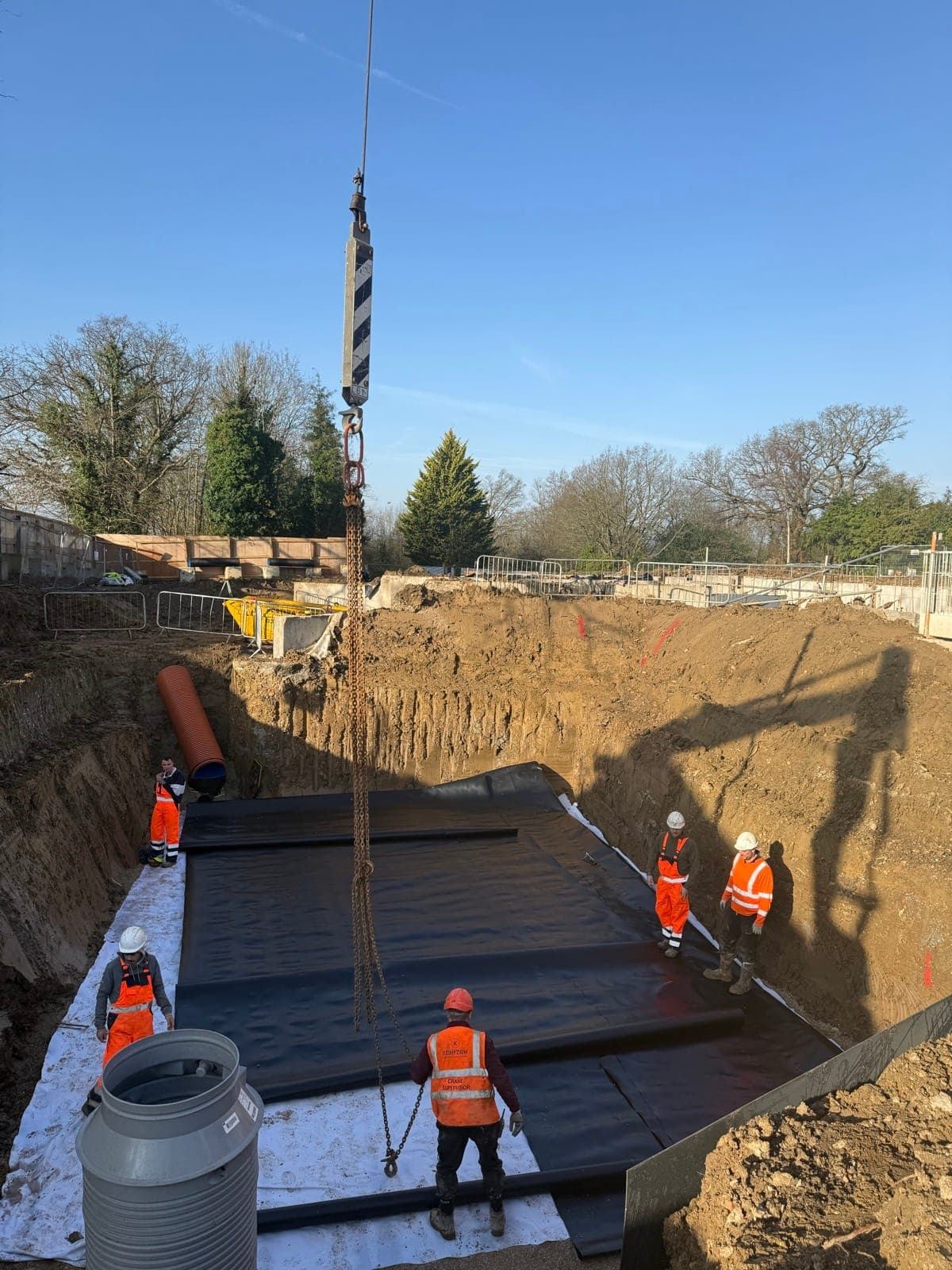
A quality installation uses both: dual-track wedge welding for the bulk of the seams, extrusion welding for corners and tie-ins, and the right test method for each. A fully sealed pond or tank is only as good as its most awkward detail, so the corners matter as much as the runs.
When is a taped system the right call?
Welding is not automatically the answer for every job, and a good installer tells you so. Taped EPDM is a sensible, cost-effective choice for ornamental garden ponds, smaller water features and lower-risk applications where a thermoplastic weld would be overkill and the large-panel convenience of EPDM is a genuine advantage.
The line to watch is risk and longevity. For attenuation tanks, lagoons, reservoirs, industrial and agricultural containment — anywhere a leak is expensive, hard to reach or environmentally significant — a welded, QA-tested thermoplastic liner is the defensible specification.
What to ask your liner installer
- Which seaming method are you using, and why is it right for this application?
- Are you using dual-track welding so the seams can be air-channel tested?
- How will corners, penetrations and details be sealed and tested?
- Will I get a documented QA record of the seam testing at handover?
If the answers are vague, that tells you something. If the installer can talk you through the method, the testing and the handover evidence without hesitation, that tells you something too.
Welded, tested, and built to hold
Aquatech Civils installs pond, lagoon and attenuation liners using hot wedge welding, extrusion-welded detailing, a recorded test weld on every job and QA documentation at handover. We supply and install, so the liner specification and the workmanship sit with one accountable team.
Specifying a pond, lagoon or attenuation liner? Talk to Aquatech about a welded, QA-tested installation that you can prove is sound.
Got a site that needs one of these?
Tell us the details and we'll come back with a quote within one working day.