
Skip to content

Soakaway Tanks · East Midlands

Soakaway installation in Northamptonshire

We install geocellular crate soakaways across Northamptonshire, from Northampton and the Nene valley to Corby, Kettering and the south of the county. Your groundworker digs, we build to the design, and you get the records for building control.

Where we install
  • Northampton
  • Kettering
  • Corby
  • Wellingborough
  • Rushden
  • Daventry
  • Towcester
  • Brackley
  • Oundle

Base · Tamworth B78 2BP

Ironstone, limestone and clay

Northamptonshire's geology changes over short distances. The Jurassic ironstone and limestone around Corby and Kettering is the rock that fed the county's steel and quarrying industries, and where it lies near the surface it can drain well. Lias clay fills many of the valleys, glacial boulder clay caps much of the higher ground, and the Nene valley carries sand and gravel.

A single site can sit on free-draining stone at one end and tight clay at the other. A soakaway placed from a map can end up in the wrong layer, so the design has to rest on what's found in the ground.
What decides whether a soakaway works

Your engineer or site investigation settles this before anything is ordered. These are the questions they're answering:

  • Infiltration rate, from a BRE Digest 365 percolation test at the depth the soakaway will sit
  • Groundwater level, because the crate base must sit clear of the water table in every season
  • Source protection zones, where the Environment Agency limits discharges into the ground near drinking water supplies
  • Distance from foundations, boundaries and existing drains
  • Loading, if the soakaway sits under a drive, yard or car park

Building the soakaway

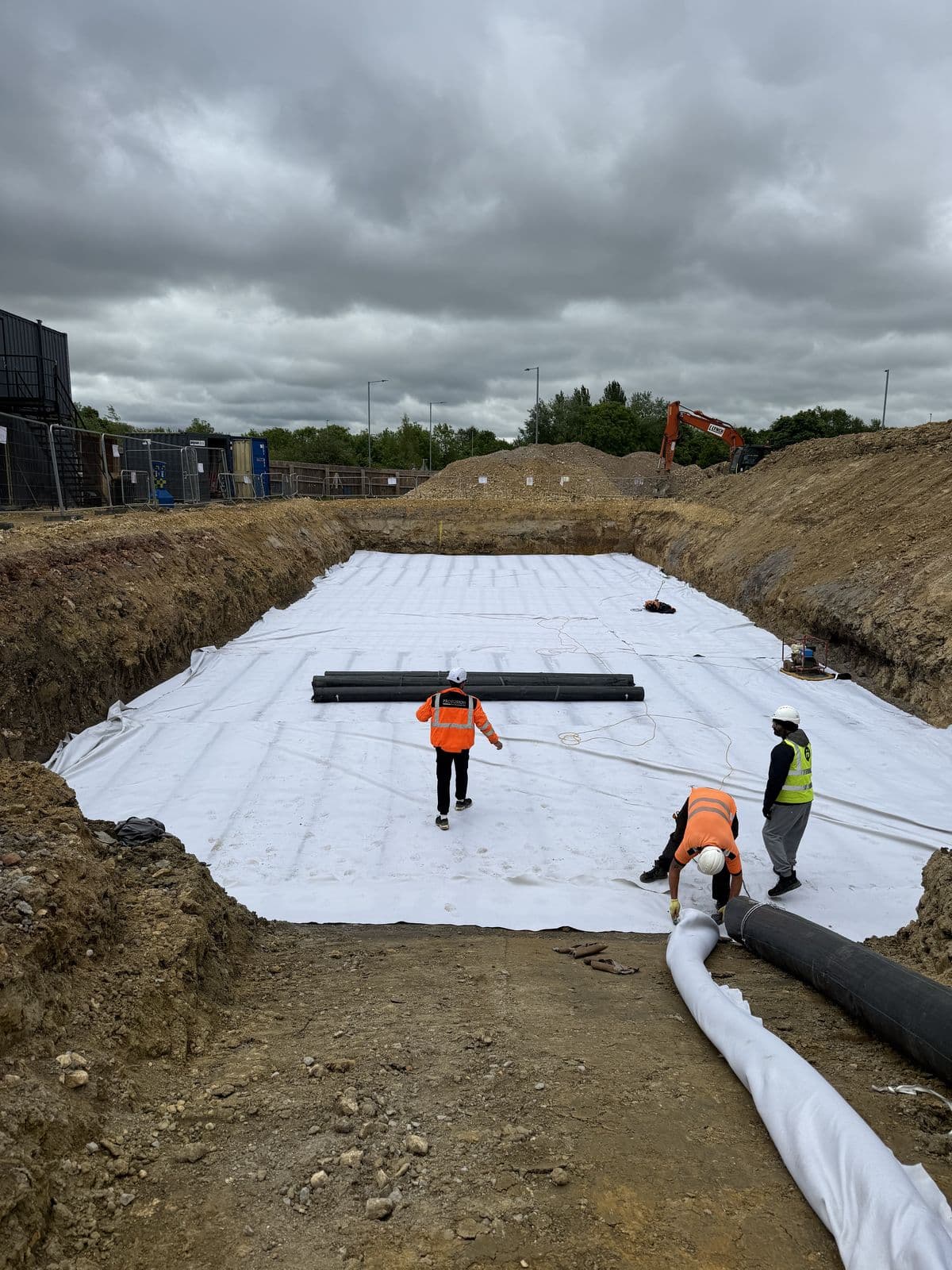
We read the design and the results before your groundworker digs, and if something doesn't add up, such as a base below the recorded groundwater level, we raise it. We don't dig or backfill. Your groundworker excavates the pit and forms the base, and we check it's level and clean before the structure goes in.

The pit is lined with permeable geotextile, which keeps silt and fines out while letting water through, and the crates are assembled inside it to the designed volume and loading class. We connect the inlet and the catchpits or filters upstream, close the geotextile over the top and hand over ready for your backfill, with inspection records and handover documentation.

When the ground says no

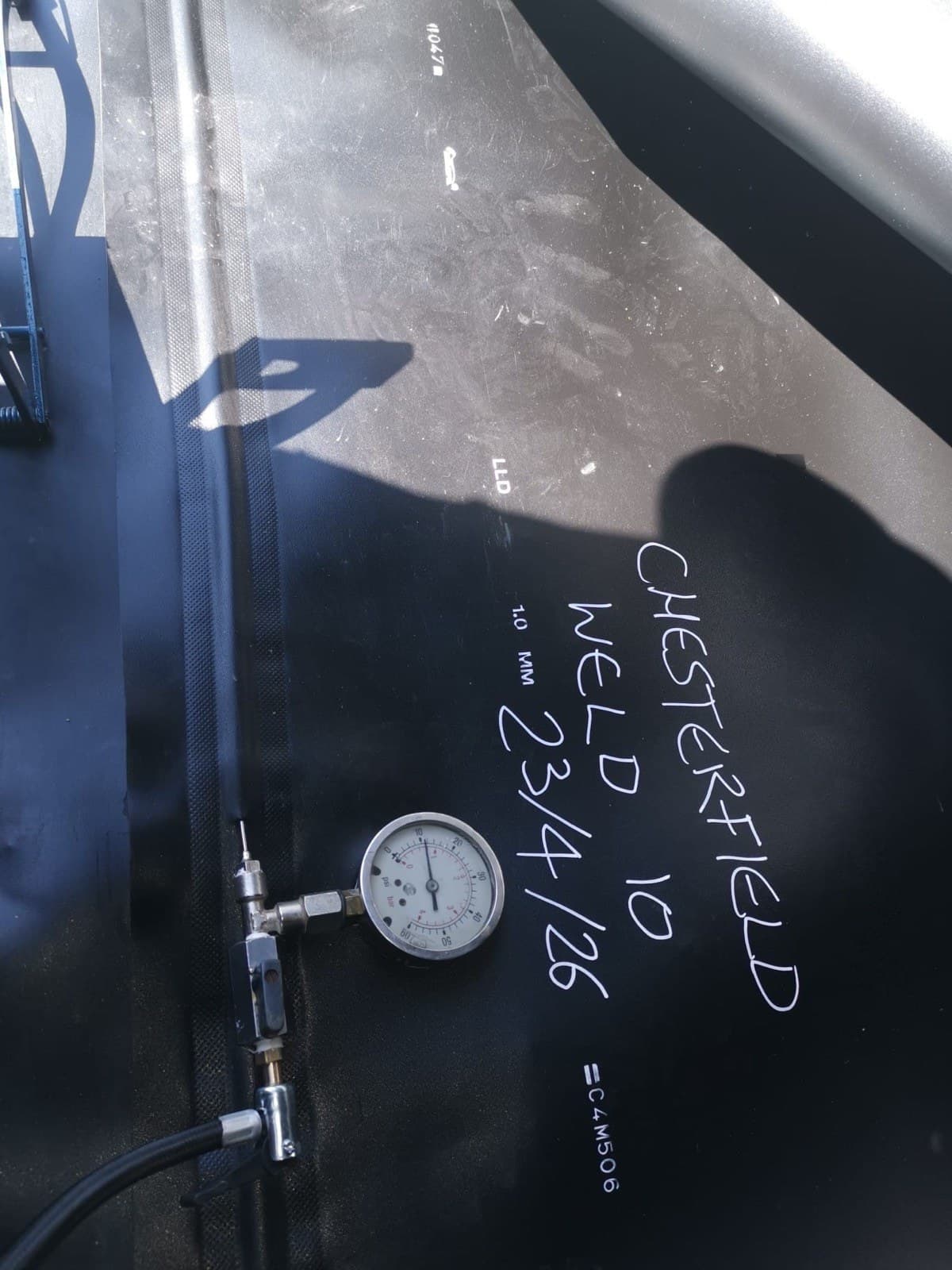
Where infiltration isn't possible, the engineer turns to attenuation: a sealed, lined tank that stores the rainfall and lets it out slowly through a flow control. We install those too. At Corby we built a 673m³ attenuation tank for the new Lidl store, 33.6m by 12m and 1.67m deep, wrapped in LLDPE membrane with every seam heat-welded and the welds pressure-tested on site.

Whichever way the design goes, you deal with one installer, working to the same standard of welding, testing and paperwork.

Soakaway Installation in Northamptonshire

Frequently asked questions

Sometimes. Where the ironstone or limestone is close to the surface, infiltration can be good. Where clay, or made ground from old ironstone workings, sits over it, it often isn't. The percolation test on your site is the only reliable answer.

No. The test and the soakaway sizing come from your engineer or site investigation. We install to their design and results, and supply the crates and geotextile if you need them.

The Environment Agency can restrict infiltration close to public water supplies. Your engineer checks this at design stage. If infiltration is ruled out, the usual alternative is an attenuation tank discharging at a controlled rate, which we also install.

It's a regular run from our Tamworth base. We work across the county, from Daventry, Towcester and Brackley to Wellingborough, Rushden and Oundle.

Tell us about your project

Quote back within one working day